If you’re exploring Supported Independent Living, the biggest question is usually the simplest one: what will it actually be like? It’s easy to picture something clinical or institutional — but a good SIL home is exactly that: a home. This guide takes you inside a typical SIL house in Adelaide, room by room, and gives you a practical checklist for when you visit one.
- A SIL house is a real home — usually an ordinary house or apartment shared by two to five residents, not a clinical facility.
- You get your own private bedroom — with shared kitchen, living and outdoor spaces for connection.
- It’s the support that makes it “SIL” — trained workers on a roster (or 24/7), not the building itself.
- Always visit in person — how a home feels, and how staff and residents interact, tells you more than any brochure.
What is a SIL house, really?
Despite the name, a “SIL house” isn’t a special type of property. It’s usually a comfortable, everyday home — a house, townhouse or apartment — where NDIS participants live together and receive Supported Independent Living support. What makes it a SIL home is the structured, rostered support delivered by trained workers, not the bricks and mortar.
This is an important distinction. Unlike Specialist Disability Accommodation (SDA) — which is purpose-built or specially modified housing — a SIL home doesn’t require special building features. Many SIL homes are simply welcoming, ordinary houses in ordinary streets, where people live as independently as possible with the right support around them. (If you’re new to how SIL works, our guide to what SIL is and how it works is a good place to start.)
A quality SIL home isn’t an institutional group-home model. It’s built around choice, privacy and personalised routines. You have your own space, your own schedule as much as possible, and support that flexes around you — not the other way around.
A tour of a typical SIL home
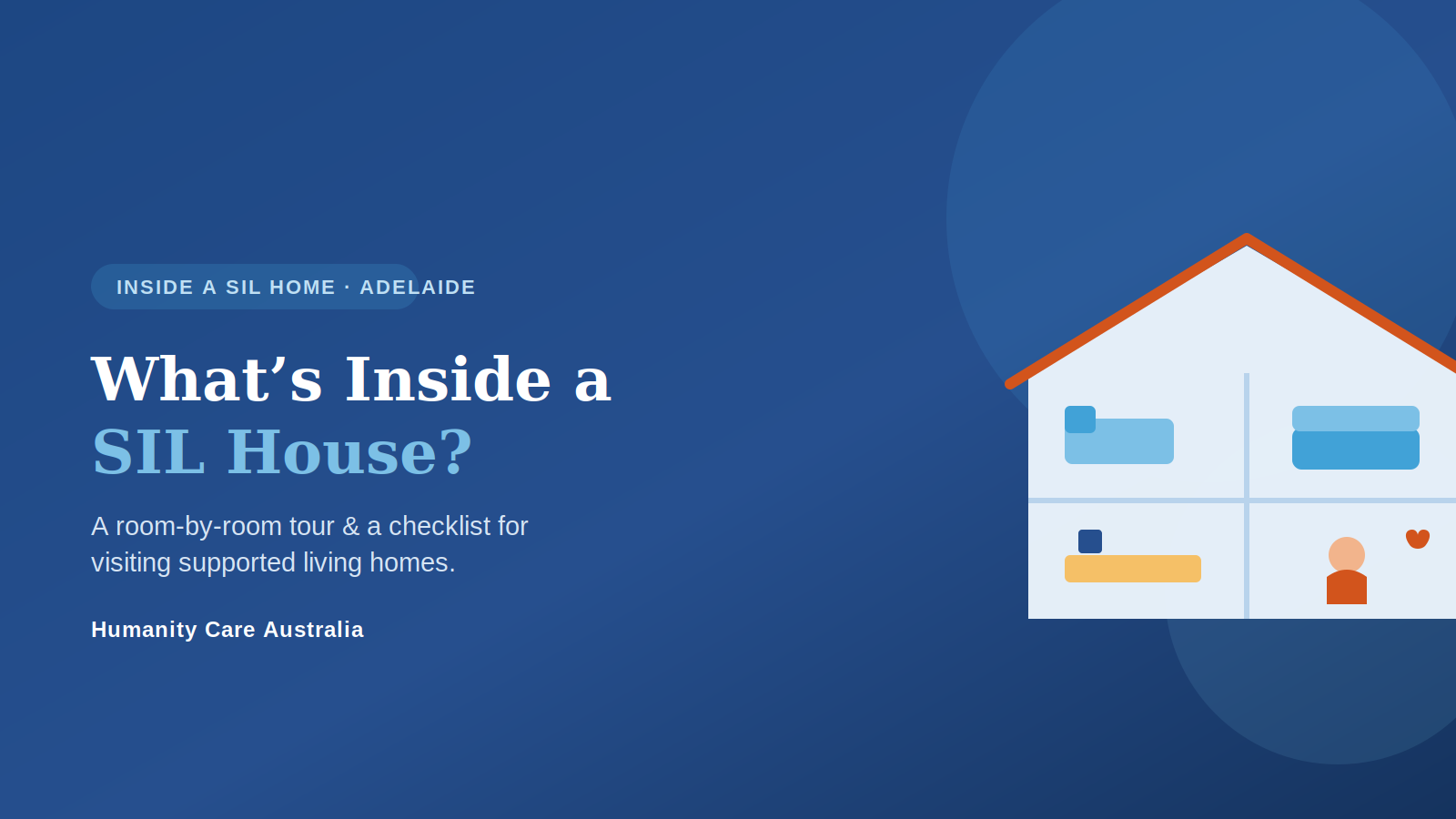
Every home is different, but most quality SIL houses share a similar layout — balancing private space with places to come together.
Your private bedroom
Your own room and personal space, which you can decorate and make your own — your retreat when you want privacy.
Shared living areas
Comfortable, well-maintained kitchen, lounge and dining spaces where residents share meals, relax and build community.
Accessible bathrooms
Bathrooms suited to residents’ needs — which may include grab rails, modified showers or other accessibility features.
Outdoor space
A garden, courtyard or patio to enjoy fresh air, potter about, or sit with housemates and visitors.
Typically two to five residents share a home, each with their own bedroom and private space, while kitchens, living areas and outdoor spaces are shared. Support workers are available on a roster — or around the clock where that’s needed.
The support that brings it to life
The building is only half the picture. What truly defines a SIL home is the team of support workers, and how they work with residents day to day. In a good home you’ll see:
Personal care
Respectful help with showering, dressing, grooming and medication, provided with dignity.
Skill-building
Support to develop independence — cooking, cleaning, laundry and budgeting — not just doing things for you.
Companionship
A friendly presence and social connection, so no one feels isolated in their own home.
Everyday routines
Support with morning and evening routines, meals, appointments and getting out into the community.
Want to see what supported living could look like?
Our Adelaide team provides person-centred SIL support built around your goals and routines. We’re happy to talk you through your options — with no pressure.
Your SIL house viewing checklist
Photos and brochures only tell you so much. Visiting in person is the single best way to know whether a home is right. Use this checklist when you tour a potential SIL house in Adelaide.
The feel of the home
- Does the house feel warm, clean and welcoming — like a home, not a facility?
- Are the shared spaces comfortable and well-maintained?
- Do the current residents seem happy, relaxed and comfortable?
- Could you picture yourself (or your loved one) living here?
Accessibility and safety
- Does the layout suit your mobility and sensory needs?
- Are there accessibility features you need — ramps, wide doorways, grab rails, a modified bathroom?
- Are there clear emergency procedures and safety measures?
- Is the location convenient for family, transport, shops and healthcare?
The support team
- How do staff and residents interact — warmly and respectfully?
- What training and experience do the support workers have?
- Is there a consistent core team, or lots of unfamiliar faces?
- How are personal routines, culture and preferences respected?
Housemates and daily life
- Would you be compatible with the current residents — routines, interests, communication styles?
- What are the house guidelines around visitors and overnight guests?
- How are disagreements between housemates handled?
- How much say do residents have in daily routines and decisions?
Be cautious if staff seem rushed or disengaged, if there’s a lack of transparency about costs and services, if accessibility features are missing, or if residents appear unhappy or isolated. Trust how the home feels — your instincts matter.
How to find SIL vacancies in Adelaide
Many SIL vacancies aren’t publicly advertised, so it pays to look in a few places at once:
- Your support coordinator — often the best source, with access to upcoming vacancies before they’re listed.
- Provider websites — many SIL providers list current or upcoming vacancies directly.
- Housing listing platforms — dedicated disability housing sites list available SIL rooms and homes.
Finding the right home can take time, and that’s okay — compatibility and comfort matter more than speed. A good support coordinator can help you search, arrange visits, and weigh up your options.
Humanity Care provides person-centred SIL support across Adelaide, delivered by a consistent, well-trained team who take the time to understand each resident’s routines, culture and goals. We focus on making a house genuinely feel like home — and we’re happy to help you understand your options without pressure.
Frequently asked questions about SIL houses
What does a SIL house look like?
A SIL house is usually an ordinary, comfortable home — a house, townhouse or apartment — shared by two to five residents. Each person has their own private bedroom, while kitchens, living areas and outdoor spaces are shared. What makes it “SIL” is the rostered support from trained workers, not any special building features.
How many people live in a SIL house?
Most SIL homes have two to five residents with compatible support needs living together. Some participants with higher needs live alone with one-to-one support. The right number depends on the individuals and how well they suit shared living.
Do I get my own room in a SIL house?
Yes. In a shared SIL home you have your own private bedroom and personal space, which you can make your own. Kitchens, living areas and outdoor spaces are shared with your housemates, giving you a balance of privacy and community.
Can I have visitors in a SIL home?
Yes, visitors are generally welcome. Most homes have reasonable guidelines around visitor hours and overnight guests, designed to balance your right to have visitors with your housemates’ comfort and privacy. These should be explained clearly before you move in.
What should I look for when visiting a SIL house?
Check whether the home feels warm, clean and welcoming; whether residents seem happy; how staff and residents interact; the accessibility features; and whether you’d be compatible with the housemates. Watch for red flags like rushed staff, a lack of cost transparency, or unhappy residents. Always trust how the home feels.
How do I find a SIL vacancy in Adelaide?
Start with your support coordinator, who often knows about vacancies before they’re advertised. Also check provider websites and dedicated disability housing listing platforms. Finding the right match can take time, so it’s worth starting early and prioritising compatibility over speed.
More than a house — a home
A great SIL home is more than its accessible features or its layout. It’s the combination of a safe, comfortable house with a supportive, consistent team who help you build your skills and live life your way. The right SIL home should feel like your home — a place with privacy when you want it, company when you need it, and support to grow your independence every day.
If you’d like to talk through supported living options in Adelaide, our friendly local team is here for a no-obligation chat.
Explore supported living in Adelaide
Talk to our local team about SIL support built around your goals and routines — and we’ll help you understand your options and take the next step.