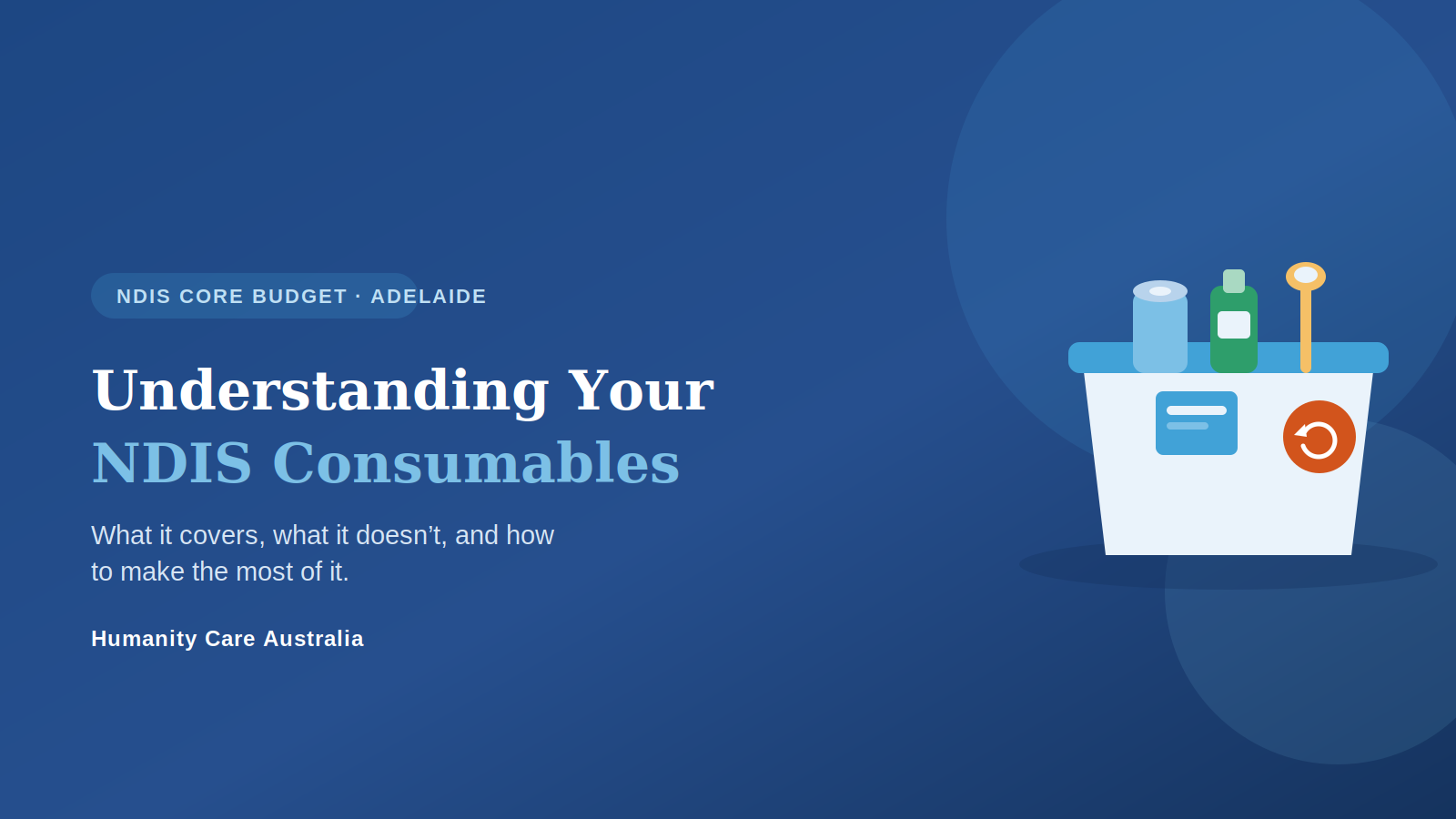
If you have an NDIS plan, there’s a good chance you have consumables funding sitting in your Core budget — but many participants aren’t quite sure what it’s for or how to use it. It’s one of the easiest parts of your plan to underuse, simply because it’s misunderstood. This guide explains what the NDIS consumables budget covers, what it doesn’t, and how to make the most of it.
- Consumables is part of your Core budget — one of its four sub-categories.
- It’s for low-cost items that get “used up” — like continence and wound-care products.
- Purchases must be disability-related — and reasonable and necessary.
- Core funding is often flexible — so you can usually move funds around within Core.
What is the NDIS consumables budget?
Consumables is one of the four sub-categories of your Core Supports budget — alongside Assistance with Daily Life, Social and Community Participation, and Transport. It’s specifically for low-cost, disability-related items that get used up over time or need regular replacement.
In plain terms, consumables funding helps you buy the everyday products that support your safety, hygiene, health and independence — the kind of items you use and then need to replace again and again.
The defining feature of a consumable is that it gets used up — unlike a wheelchair or hoist, which is a one-off, higher-cost purchase (funded under Capital Supports). Think of consumables as the ongoing, everyday products related to your disability, rather than big pieces of equipment.
What does the consumables budget cover?
Consumables can cover a range of low-cost, disability-related items, including:
Continence products
Items like continence aids, pads, catheters and related supplies — a very common use of consumables funding.
Wound & skin care
Dressings, wound-care supplies and disability-related skin protection products.
Low-cost assistive technology
Everyday, low-cost aids that fall under a set threshold — like adaptive utensils and simple daily-living aids.
Nutrition-related supplies
Certain disability-related nutrition supplies, such as supplies for enteral (tube) feeding, where relevant.
The common thread is that these items must be disability-related and meet the NDIS “reasonable and necessary” test — genuinely connected to your disability and your goals, not just everyday shopping.
What doesn’t the consumables budget cover?
Just as important is knowing what consumables won’t fund. Generally, it doesn’t cover:
- Everyday items — like standard food and general toiletries that anyone would buy.
- Prescription medication and vitamins — these are usually covered elsewhere, such as through the PBS.
- Higher-cost equipment — complex or expensive items like custom wheelchairs or hoists are Capital Supports, not consumables.
- Anything not disability-related — if it isn’t connected to your disability, it won’t be funded.
The line between consumables and Capital Supports usually comes down to cost and type. Low-cost, everyday items that get used up sit in Consumables. Higher-cost, one-off equipment — above a set threshold — sits in Capital Supports, and typically needs an assessment (for example, from an occupational therapist) before purchase. If you’re unsure which applies, it’s worth checking.
Make the most of your NDIS plan
Our Adelaide team helps participants understand and use every part of their plan well — so no funding goes to waste and your supports genuinely work for you.
How flexible is your consumables funding?
Here’s some good news: the Core Supports budget is generally the most flexible part of your plan. In most cases, you can move funding between the four Core sub-categories — so if you need to spend a bit more on consumables and a bit less elsewhere in Core, you usually can.
There are two things to keep in mind, though. First, you generally can’t move funding out of Core into Capital or Capacity Building without a plan change. Second, some supports are “stated” in your plan, meaning they can only be used for that specific purpose. If in doubt, check your plan or ask for help understanding it.
NDIS planning is changing from 2026 under the new framework, and for some participants the way budgets work — including consumables — may become more flexible over time. The rollout is gradual. Because the details are still evolving, always check the current rules on the official NDIS website (ndis.gov.au), or ask your support coordinator how any changes affect your plan.
Tips for using your consumables budget well
To get the most from your consumables funding:
- Know what’s in your plan — check how much consumables funding you have and whether it’s flexible or stated.
- Buy what genuinely helps — focus on disability-related items that support your safety, health and independence.
- Keep your receipts — especially if you’re self-managed, good records make claiming and reviews easier.
- Don’t let it go to waste — consumables is easy to underuse; make sure you’re accessing the products you’re entitled to.
- Ask if you’re unsure — a support coordinator or plan manager can help you understand and use it well.
Humanity Care helps Adelaide participants understand and use every part of their NDIS plan — including easily-overlooked parts like consumables. Through clear guidance and quality support services, we make sure your plan works as hard as it can for you, with no funding left on the table.
Frequently asked questions about NDIS consumables
What is the NDIS consumables budget?
Consumables is one of the four sub-categories of your Core Supports budget. It’s for low-cost, disability-related items that get used up or need regular replacement — helping you buy the everyday products that support your safety, hygiene, health and independence. Purchases must be disability-related and meet the NDIS reasonable and necessary test.
What can I buy with consumables funding?
Common examples include continence products (pads, catheters and related supplies), wound-care and skin-protection products, low-cost assistive technology and daily-living aids (like adaptive utensils), and certain disability-related nutrition supplies. The key is that items must be disability-related and genuinely connected to your needs and goals.
What isn’t covered by consumables?
Consumables generally doesn’t cover everyday items like standard food and general toiletries, prescription medication or vitamins (usually covered through the PBS), or higher-cost equipment like custom wheelchairs and hoists (which are Capital Supports). And anything not related to your disability won’t be funded.
What’s the difference between consumables and Capital Supports?
It usually comes down to cost and type. Low-cost, everyday items that get used up sit in Consumables (part of Core). Higher-cost, one-off equipment above a set threshold — like custom wheelchairs or hoists — sits in Capital Supports and typically needs an assessment (for example, from an occupational therapist) before purchase.
Can I move funding into consumables?
Often, yes. The Core budget is generally the most flexible part of your plan, so in most cases you can move funding between the four Core sub-categories, including consumables. However, you generally can’t move funding out of Core into Capital or Capacity Building without a plan change, and “stated” supports can only be used for their specific purpose.
How can Humanity Care help with my NDIS plan?
Humanity Care helps Adelaide participants understand and use every part of their plan — including easily-overlooked parts like consumables — through clear guidance and quality support services. Get in touch for a no-obligation chat about getting the most from your NDIS plan, with no funding left on the table.
Don’t leave funding on the table
Your consumables budget might be small compared to other parts of your plan, but it’s there to help — and it’s one of the easiest things to underuse simply through not understanding it. Know what it covers, use it for the disability-related products that genuinely help you, keep good records, and don’t let it go to waste. Small as it is, it can make a real, everyday difference.
If you’d like help understanding and making the most of your NDIS plan in Adelaide, our friendly local team is here to help.
Get the most from your NDIS plan in Adelaide
Talk to our team about understanding and using every part of your plan well — including consumables — with no obligation.