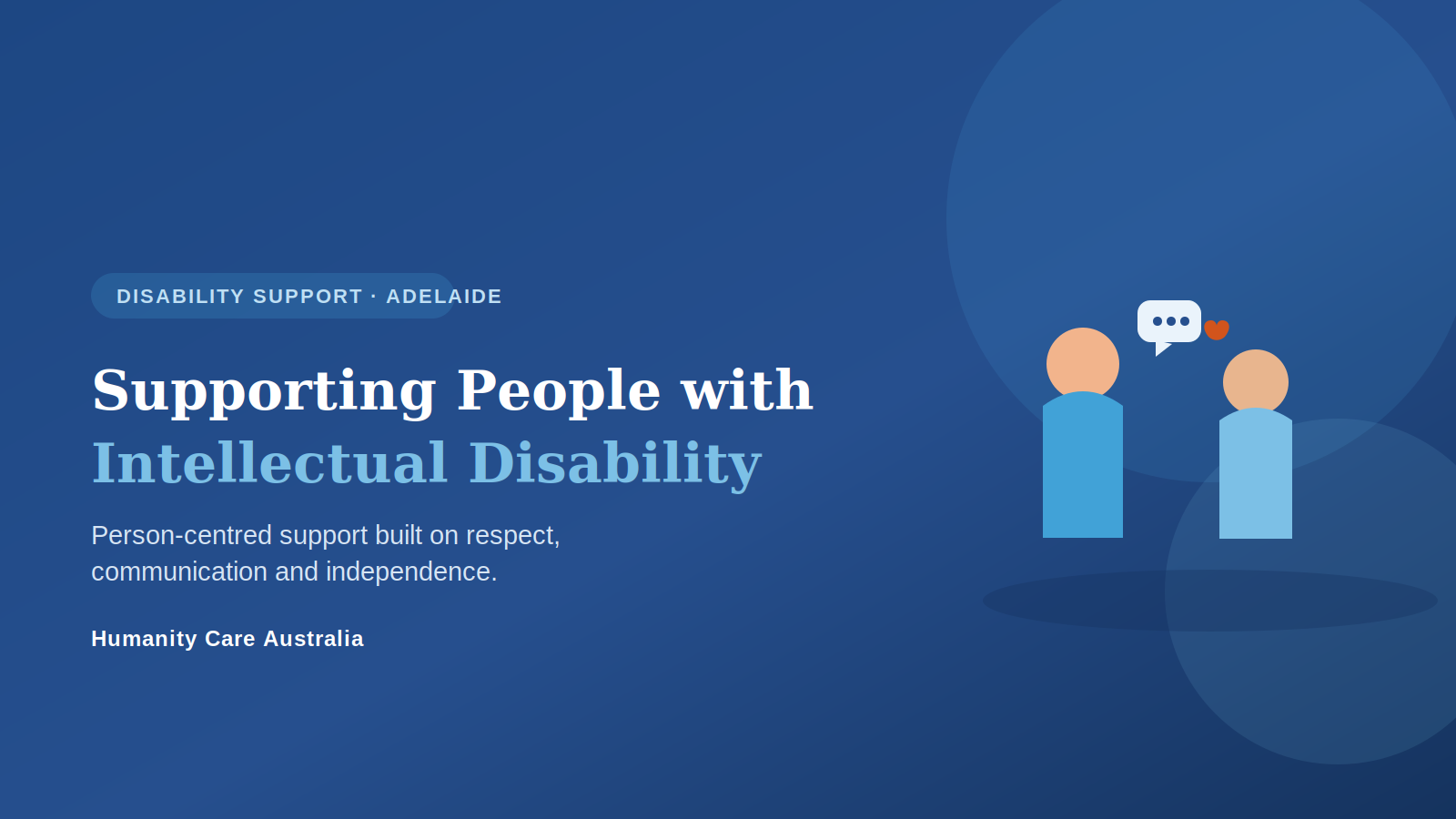
Every person deserves to live a full, connected and self-directed life — and with the right support, people with intellectual disability do exactly that. Good support isn’t about doing everything for someone; it’s about understanding them, respecting their choices, and enabling them to live the life they want. This guide explores what intellectual disability is, and the principles of supporting people well — with dignity, patience and respect.
- Focus on the person, not the diagnosis — everyone is an individual with their own strengths and goals.
- Communication is key — clear, patient, accessible communication makes all the difference.
- Support independence — do with, not for, building skills and confidence.
- Respect choice and dignity — people have the right to make their own decisions.
What is intellectual disability?
Intellectual disability affects a person’s intellectual functioning (things like learning, reasoning and problem-solving) and their adaptive behaviour (everyday practical and social skills). It usually begins early in life, and it exists on a wide spectrum — some people need only a little support, while others need more comprehensive help across daily life.
What’s most important to understand is that intellectual disability is just one part of a person. Everyone with an intellectual disability is a unique individual, with their own personality, strengths, interests, relationships and goals — and, with the right support, the capacity to live a rich and meaningful life.
The single most important principle: see the person, not the disability. Someone isn’t “an intellectual disability” — they’re a person who happens to have one, alongside all the other things that make them who they are. Good support starts by getting to know the individual: what they like, what they’re good at, what matters to them, and what they want from life.
Principles of good support
Supporting someone with intellectual disability well comes down to a few core principles that apply across every situation.
Clear communication
Use plain language, allow time, check understanding, and use visual aids or other tools where helpful. Communication is a two-way street.
Patience and respect
Give people time, never rush or talk down to them, and always treat them with the dignity you’d want yourself.
Supporting independence
Do with, not for — support people to do as much as they can themselves, building skills and confidence.
Choice and control
Offer real choices, respect decisions, and support people to direct their own lives — the dignity of self-determination.
Communication: getting it right
Good communication is at the heart of good support. A few practical approaches make a big difference:
- Use plain, clear language — short sentences, everyday words, one idea at a time.
- Allow processing time — give the person time to take in information and respond, without rushing.
- Check understanding — gently confirm you’ve understood each other, rather than assuming.
- Use visual supports — pictures, symbols or demonstrations can help where words alone don’t.
- Listen to all communication — some people communicate through behaviour, gesture or expression, not just words.
- Speak to the person directly — not to their support worker or family member about them.
A common mistake is talking about a person with intellectual disability as if they aren’t there, or directing questions to their companion instead of them. Always speak to the person directly, and presume competence — assume the person can understand and contribute, and adapt if needed. It’s a matter of basic respect.
Person-centred disability support in Adelaide
Our Adelaide team supports people with intellectual disability with patience, respect and a genuine focus on the individual — building independence and enabling a full life.
Supporting independence and skill-building
One of the most valuable things support can do is help a person build their own capabilities. This is where the “do with, not for” approach — known as active support — comes in. Rather than completing tasks for someone, a good support worker enables them to participate and learn, building life skills and confidence over time.
This might mean supporting someone to cook a meal, manage a routine, catch public transport, or take part in the community — always at their pace, always focused on growing their independence. Every skill built is a step towards a more self-directed life.
Enabling a full life
Good support goes beyond daily tasks — it’s about a whole, connected life. That includes:
Community and connection
Support to build friendships, join activities, and be a genuine part of the community.
Meaningful activity
Opportunities to pursue interests, learn, contribute, and do things that bring purpose and joy.
Health and wellbeing
Support to stay healthy, access services, and look after physical and emotional wellbeing.
Relationships and roles
Supporting the relationships and life roles that matter to the person — family, friends, community.
Humanity Care provides person-centred disability support across Adelaide for people with intellectual disability. We take the time to understand each person, communicate in ways that work for them, support their independence, and respect their choices — helping them live the full, connected life they choose.
Frequently asked questions about supporting intellectual disability
What is intellectual disability?
Intellectual disability affects a person’s intellectual functioning (learning, reasoning, problem-solving) and adaptive behaviour (everyday practical and social skills). It usually begins early in life and exists on a wide spectrum, from needing a little support to needing more comprehensive help. Importantly, it’s just one part of a person — everyone is a unique individual.
How can I communicate well with someone with intellectual disability?
Use plain, clear language and short sentences, allow time for the person to process and respond, check understanding gently, and use visual supports where helpful. Listen to all forms of communication — not just words — and always speak to the person directly rather than to their companion. Presume competence and adapt as needed.
What does “do with, not for” mean?
It means supporting a person to participate in and complete tasks themselves, rather than doing everything for them. This approach — known as active support — builds skills, confidence and independence over time. A good support worker enables participation at the person’s pace, gradually stepping back as capability grows.
How do I support someone’s independence?
Support independence by offering real choices, respecting decisions, and helping the person build life skills — like cooking, managing routines, or using transport — at their own pace. The goal is to grow their capability and confidence so they can do more for themselves and direct their own life.
Can people with intellectual disability make their own choices?
Yes. People with intellectual disability have the same right as anyone to make choices about their own lives. Good support means offering choices in accessible ways, respecting decisions, and providing support for decision-making where needed — not making decisions for the person. Choice and control are central to dignity and self-determination.
Does Humanity Care support people with intellectual disability?
Yes. Humanity Care provides person-centred disability support across Adelaide for people with intellectual disability — focused on the individual, their communication, their independence and their choices. Get in touch for a no-obligation chat about how we can help.
Support that empowers
Supporting someone with intellectual disability well is, at its heart, simple: see the person, communicate with care, build independence, and respect their choices. Do those things, and support becomes genuinely empowering — helping people live full, connected lives on their own terms.
If you’re looking for person-centred disability support in Adelaide, our friendly local team is here to help.
Find person-centred support in Adelaide
Talk to our local team about respectful, empowering disability support built around the individual — with no obligation.