When you start out with the NDIS, you’ll meet a few different people — and their titles sound confusingly similar. Planner, coordinator, plan manager, LAC… who does what? This guide focuses on the NDIS planner: who they are, what they do, and how they differ from the other roles you’ll come across. Get this clear, and the whole system starts to make more sense.
- An NDIS planner works for the NDIA — and has the authority to approve your plan and funding.
- A planner is different from an LAC — an LAC helps you prepare, but can’t approve anything.
- You’ll often deal with an LAC day to day — now called your “my NDIS contact.”
- Planners, coordinators and plan managers are all different roles — and you can work with more than one.
What is an NDIS planner?
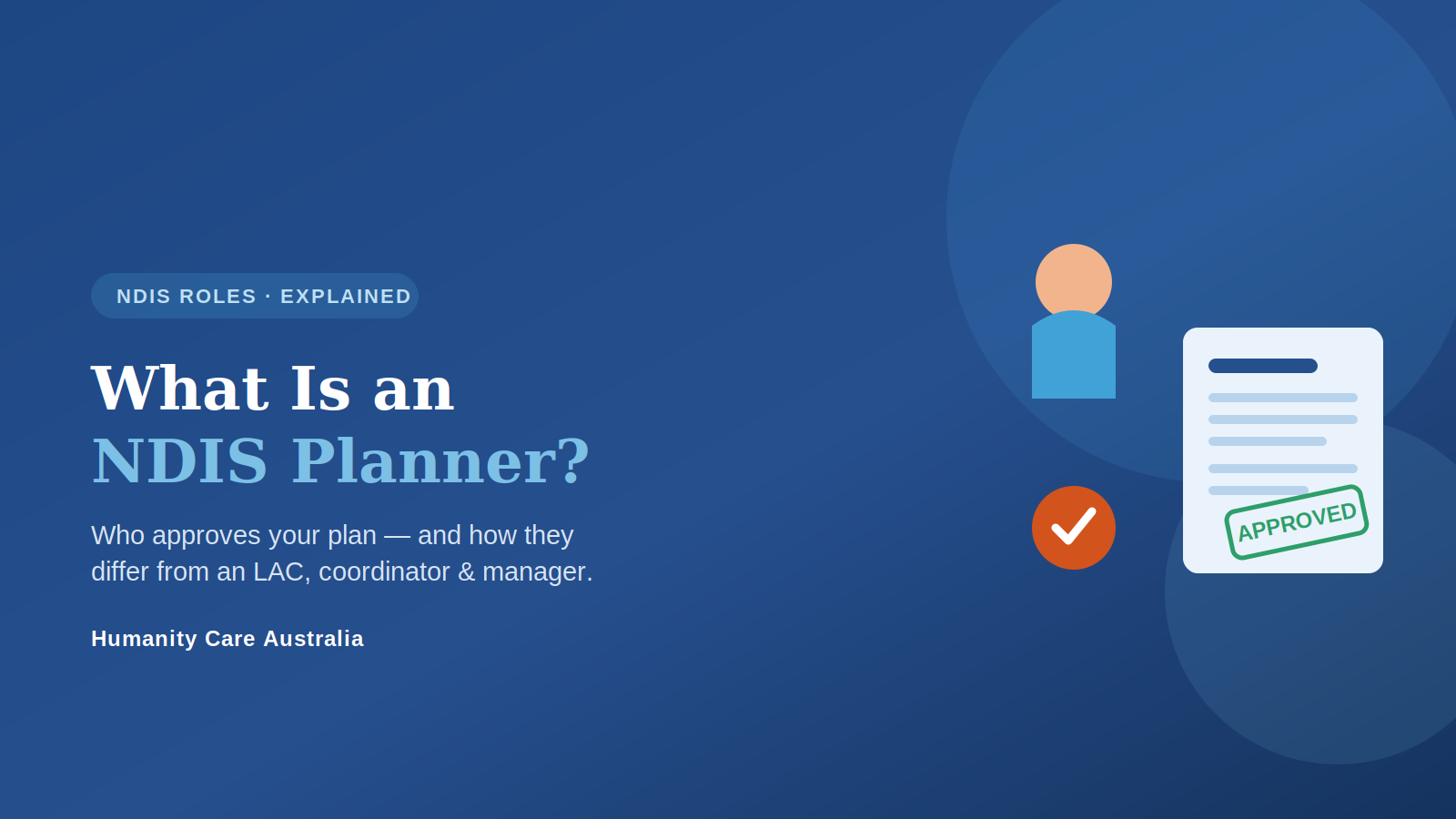
An NDIS planner — sometimes called a delegate — is an employee of the National Disability Insurance Agency (NDIA). Their defining feature is authority: a planner has been given the power under the NDIS Act to approve your plan and decide your funding.
This is the crucial thing to understand. Of all the people you’ll meet on your NDIS journey, the planner is the one who can actually say yes to your plan. Other roles support and guide you, but the planner (or delegate) makes the formal decision.
You may hear both terms. “Delegate” is simply another name for an NDIA planner — a staff member who’s been delegated the authority to make decisions under the NDIS Act. Don’t confuse a planner with a plan manager, which is a completely different role (that one handles your money).
What does an NDIS planner do?
An NDIS planner is involved at the key decision points of your NDIS journey:
Reviews your information
They consider the evidence and recommendations gathered about your needs, goals and supports.
Approves your plan
They make the formal decision about your plan and the funding it includes.
Runs reassessments
They conduct check-ins and plan reassessment meetings, and approve plan changes.
Makes the call on complex cases
If your situation is complex, you may deal with an NDIA planner directly rather than an LAC.
Planner vs LAC: the key difference
This is where most of the confusion lives. For many participants, the person they actually talk to day to day isn’t a planner at all — it’s a Local Area Coordinator (LAC).
An LAC works for a community-based partner organisation contracted by the NDIA — not the NDIA itself. They help you understand the NDIS, prepare for your planning meeting, gather information, and connect with supports. But here’s the critical point: an LAC cannot approve your plan or decide your funding. They put together recommendations and submit them; the NDIA planner makes the actual decision.
| NDIS planner (delegate) | Local Area Coordinator (LAC) | |
|---|---|---|
| Works for | The NDIA directly | A partner organisation (contracted by the NDIA) |
| Can approve your plan? | Yes | No |
| Main role | Decides and approves funding | Helps you prepare and navigate |
| Cost to you | Free | Free |
The NDIA now uses the term “my NDIS contact” for the person assigned to support you. Usually that’s your LAC, though in special circumstances it may be an NDIA staff member. Either way, this is your day-to-day point of contact for your plan, check-ins and reassessments.
Getting ready for your planning meeting?
Our Adelaide team can help you understand the process, prepare for your meeting, and connect with the right supports once your plan is approved — with no pressure.
Who’s who in the NDIS: the four roles
Since the titles blur together, here’s the whole cast in one place:
NDIS planner (delegate)
An NDIA employee who approves your plan and funding. The decision-maker.
Local Area Coordinator (LAC)
Helps you prepare, navigate and understand your plan. Can’t approve funding.
Support coordinator
A funded support that helps you use your plan — connecting you with providers and coordinating services.
Plan manager
Handles the money side — paying invoices and tracking your budget.
The simplest way to remember it: the planner approves your plan, the LAC helps you prepare it, the support coordinator helps you use it, and the plan manager handles the money.
How to get the most from your planning meeting
Whether you meet with an LAC or an NDIA planner, your planning meeting shapes your first plan — so preparation matters. A few tips:
- Be clear about your goals — short and long term. Your goals drive everything that follows.
- Describe your current supports — informal help from family and friends, and any services you already use.
- Identify the gaps — where your disability creates barriers that existing supports can’t address. That’s what NDIS funding is designed to fill.
- Bring evidence — reports, assessments and quotes strengthen your case.
- Think about plan management — decide whether you want to be self-managed, plan-managed or agency-managed.
The NDIS is evolving. From 1 July 2026, LACs began delivering “new framework planning” for participants over 18 with less complex situations, and planning processes are changing. It’s worth confirming the current process with the NDIS or your my NDIS contact, as the details continue to develop.
Humanity Care is a registered NDIS provider in Adelaide. While we’re not your planner or LAC, we can help you prepare for your planning meeting, understand your plan once it’s approved, and connect you with the right supports to make it work — without pressure.
Frequently asked questions about NDIS planners
What is an NDIS planner?
An NDIS planner (also called a delegate) is an employee of the NDIA who has the authority to approve your NDIS plan and decide your funding. They’re the decision-maker — other roles support and guide you, but the planner makes the formal call on your plan.
What’s the difference between an NDIS planner and an LAC?
An NDIS planner works for the NDIA and can approve your plan and funding. A Local Area Coordinator (LAC) works for a partner organisation, helps you prepare and navigate, but can’t approve anything — they submit recommendations to the NDIA planner, who makes the decision. Both services are free.
Is an NDIS planner the same as a plan manager?
No — they’re completely different. A planner is an NDIA decision-maker who approves your plan. A plan manager is a separate provider who handles the financial side of your plan, paying invoices and tracking your budget. The similar names cause a lot of confusion, but the roles don’t overlap.
What is a “my NDIS contact”?
“My NDIS contact” is the current NDIA term for the person assigned to support you within the NDIS. Usually this is your LAC, though in special circumstances it may be an NDIA staff member. They’re your day-to-day point of contact for your plan, check-ins and reassessments.
Will I meet a planner or an LAC?
It depends on your situation. Most participants deal with an LAC for their planning and day-to-day support. If your situation is more complex, you may work directly with an NDIA planner instead. For children under 9, the equivalent is an Early Childhood Partner.
Can Humanity Care help me prepare for my planning meeting?
Yes. While we’re not your planner or LAC, Humanity Care can help you understand the process, think through your goals and evidence, and connect you with the right supports once your plan is approved. Get in touch for a no-obligation chat.
Knowing who does what
The NDIS involves a whole cast of people, and it’s easy to feel lost among the job titles. But the key is simple: your planner approves your plan, your LAC helps you prepare it, your support coordinator helps you use it, and your plan manager handles the money. Knowing who does what helps you ask the right person for the right thing — and feel more in control of your journey.
If you’d like help preparing for your NDIS journey in Adelaide, our friendly local team is here for a no-obligation chat.
Get help with your NDIS journey in Adelaide
Talk to our local team about preparing for your plan and the support available — and we’ll help you understand your next steps, with no obligation.