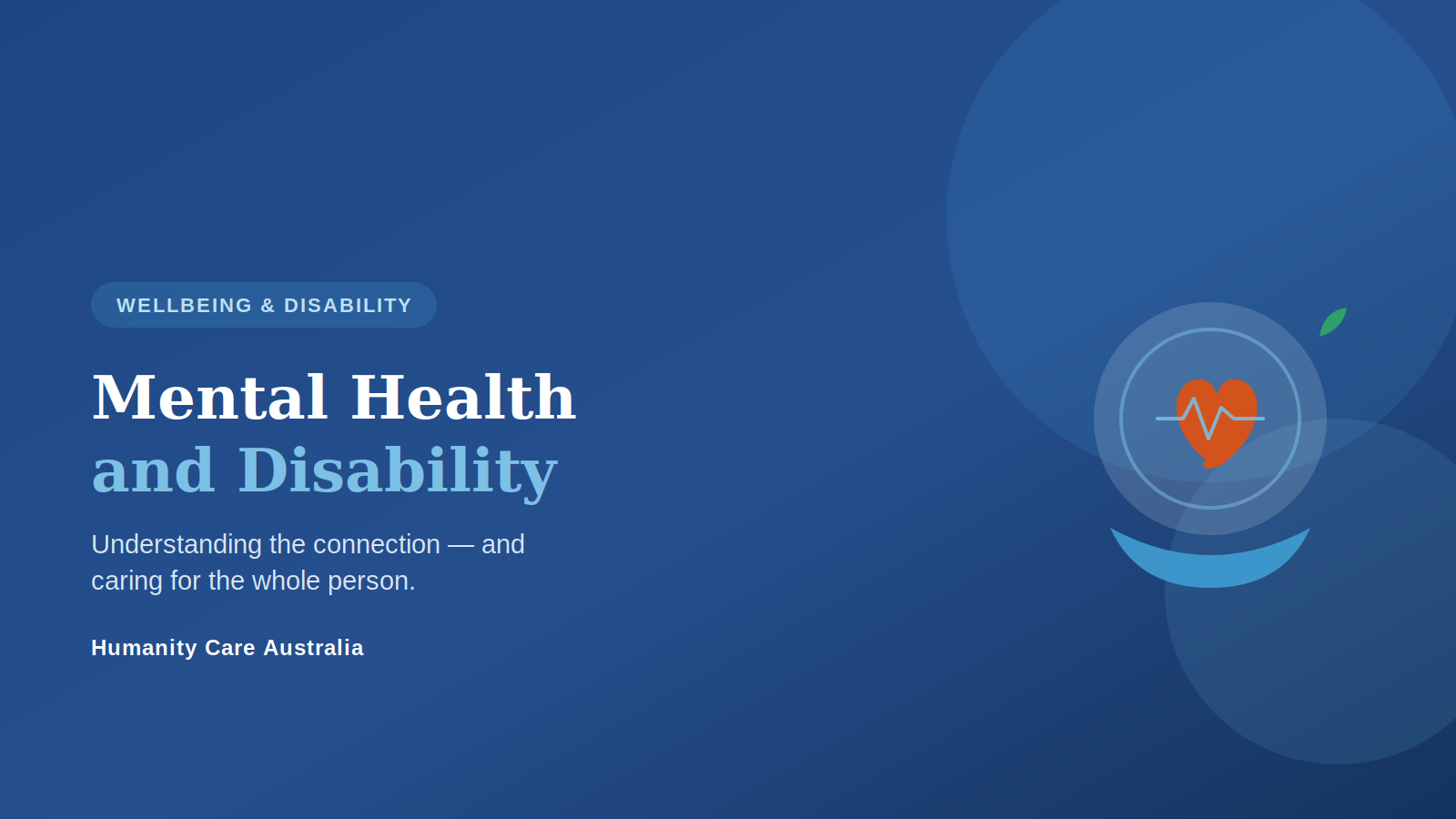
Mental health and disability are deeply connected — in more ways than many people realise. For some, a mental health condition is their disability. For many others living with disability of any kind, looking after mental wellbeing is a vital, and sometimes overlooked, part of a good life. Understanding this connection helps us support people more holistically. This guide explores the relationship between mental health and disability, and why caring for both matters.
- Mental health and disability are linked — in several important, two-way ways.
- Mental health conditions can be disabilities — when their impact is significant and ongoing.
- People with disability face higher mental-health risks — so wellbeing support matters.
- Holistic support cares for the whole person — mind and body together.
Two sides of a connected story
The relationship between mental health and disability works in more than one direction. It helps to think of it as two connected truths:
Mental health as a disability
For some people, a mental health condition itself creates significant, ongoing functional impairment — a psychosocial disability.
Mental health and other disability
People living with any kind of disability can also experience mental health challenges — and supporting their wellbeing matters greatly.
Both matter, and both deserve understanding and support. Let’s look at each.
When mental health is the disability
For some people, a mental health condition — such as schizophrenia, bipolar disorder, or severe depression or anxiety — creates a significant, ongoing impact on daily life. When that happens, it’s known as a psychosocial disability: the functional impact of a mental health condition on a person’s ability to do everyday things.
Psychosocial disability is a recognised disability, and where its impact is significant and likely to be permanent, the NDIS may provide support. It’s a distinct and important topic in its own right — our guide on understanding psychosocial disability explores it in depth.
An important distinction: not everyone with a mental health condition has a psychosocial disability. Many people manage their mental health without it significantly limiting daily life. Psychosocial disability specifically describes situations where a mental health condition creates significant, ongoing functional impairment.
Mental health and living with disability
The other side of the story is just as important. People living with disability of any kind — physical, intellectual, sensory or otherwise — can face a higher risk of mental health challenges. There are understandable reasons for this:
- Barriers and exclusion — facing physical, social or attitudinal barriers can affect wellbeing.
- Isolation — loneliness and limited social connection are significant risks to mental health.
- Additional stresses — navigating systems, managing health, and daily challenges can take a toll.
- Others’ attitudes — stigma and low expectations from others can affect self-worth.
None of this is inevitable — but recognising these risks means we can actively support mental wellbeing, rather than treating it as an afterthought.
Good disability support doesn’t just address practical needs — it supports the whole person, including their mental and emotional wellbeing. Connection, purpose, choice, independence and being genuinely valued are all powerful protectors of mental health. Support that fosters these does far more than help with tasks.
Support for the whole person
Our Adelaide team provides holistic, person-centred support — caring for wellbeing as well as practical needs, and helping people live connected, meaningful lives.
Supporting mental wellbeing holistically
So how do we support mental wellbeing alongside disability? Some of the most powerful approaches are also the most human:
Connection and belonging
Supporting relationships and community participation — because connection protects mental health.
Purpose and activity
Meaningful activities, interests and goals that bring a sense of purpose and achievement.
Independence and choice
Supporting people to have control over their own lives — a foundation of wellbeing and self-worth.
Access to help
Recognising when someone needs professional mental health support, and helping them access it.
Everyday support does a lot for wellbeing, but it isn’t a substitute for professional mental health care when that’s needed. If you or someone you support is struggling, reaching out to a GP, psychologist or mental health service is a positive, important step. If you or someone you know is in crisis, please contact Lifeline on 13 11 14, or in an emergency call 000.
Humanity Care provides holistic, person-centred disability support across Adelaide. We care for the whole person — supporting connection, purpose, independence and wellbeing alongside practical needs, and helping people access further support when they need it. Because mental health and a good life go hand in hand.
Frequently asked questions about mental health and disability
How are mental health and disability connected?
In two main ways. First, a mental health condition can itself be a disability (a psychosocial disability) when its impact is significant and ongoing. Second, people living with any kind of disability can face a higher risk of mental health challenges. Both sides matter, and supporting mental wellbeing is an important part of holistic disability support.
Can a mental health condition be a disability?
Yes. When a mental health condition creates significant, ongoing functional impairment, it’s known as a psychosocial disability. Where the impact is significant and likely to be permanent, the NDIS may provide support. Not everyone with a mental health condition has a psychosocial disability — it depends on the impact on daily life.
Why do people with disability face higher mental-health risks?
For understandable reasons: facing physical, social or attitudinal barriers; isolation and limited social connection; the additional stresses of navigating systems and daily challenges; and the impact of stigma and others’ low expectations. Recognising these risks means we can actively support mental wellbeing rather than treating it as an afterthought.
How can disability support help mental wellbeing?
Good support cares for the whole person — fostering connection and belonging, purpose and meaningful activity, independence and choice, and being genuinely valued. These are powerful protectors of mental health. Good support also recognises when someone needs professional mental health care and helps them access it.
When should someone seek professional mental health support?
Everyday support helps wellbeing, but isn’t a substitute for professional care when it’s needed. If you or someone you support is struggling, reaching out to a GP, psychologist or mental health service is a positive step. If you or someone you know is in crisis, please contact Lifeline on 13 11 14, or in an emergency call 000.
Does Humanity Care support mental wellbeing?
Yes. Humanity Care provides holistic, person-centred disability support across Adelaide — caring for the whole person, supporting connection, purpose, independence and wellbeing, and helping people access further support when they need it. Get in touch for a no-obligation chat about how we can help.
Caring for mind and body together
Mental health and disability are inseparable parts of a whole person — and the best support recognises this. Whether a mental health condition is itself the disability, or wellbeing is one part of supporting someone with disability, caring for mental health is never optional. It’s central to helping people live full, connected, meaningful lives.
If you’re looking for holistic, person-centred support in Adelaide, our friendly local team is here to help.
This article touches on mental health, which can be a sensitive topic. If you or someone you know is struggling, support is available: Lifeline (13 11 14) and Beyond Blue (1300 22 4636) offer free, confidential help, and your GP is a good first port of call. In an emergency, call 000.
Find holistic support in Adelaide
Talk to our local team about person-centred support that cares for the whole person — with no obligation.