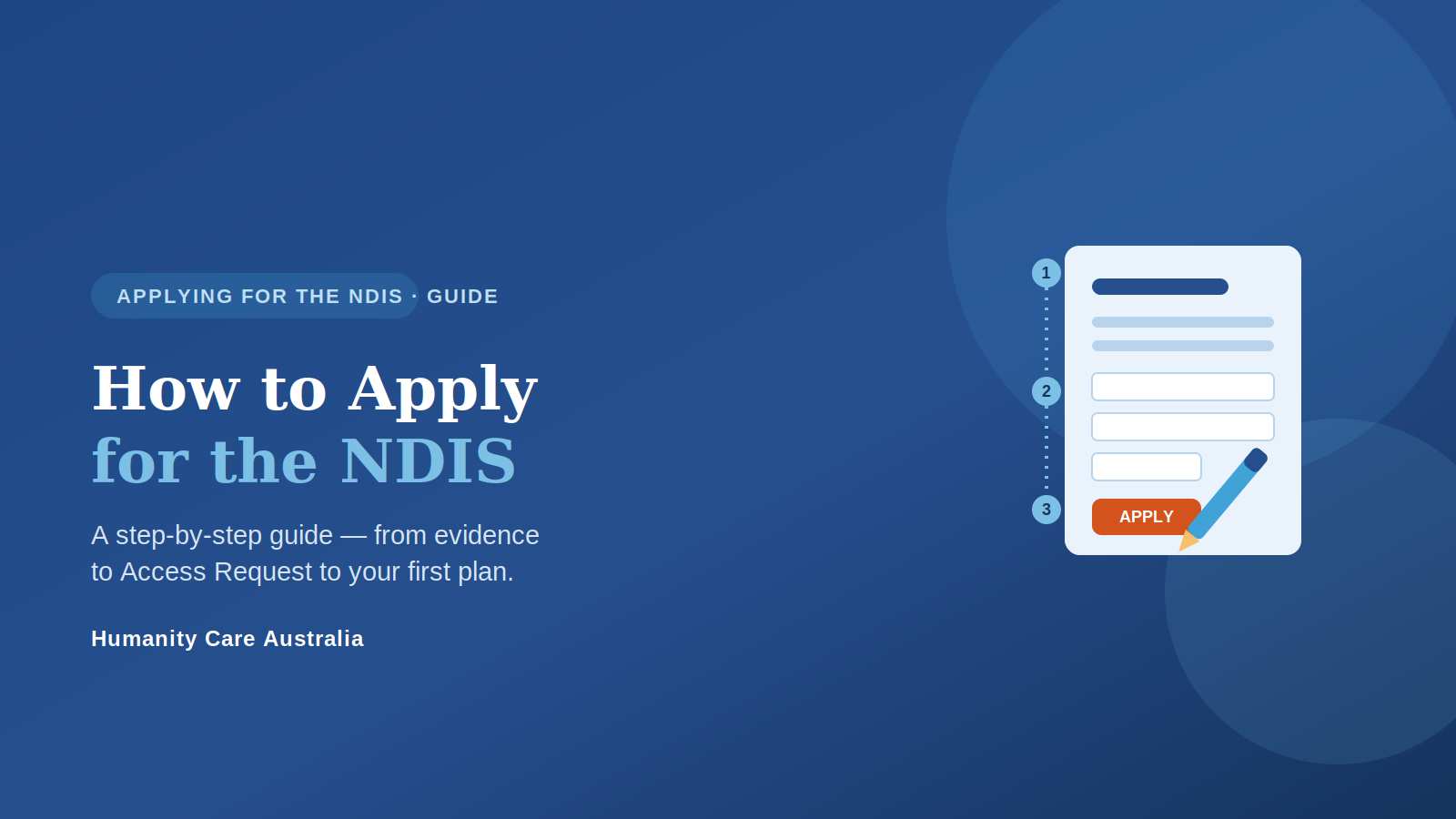
You’ve worked out that the NDIS might be right for you or your loved one — so what now? The application process can feel like a maze of forms, evidence and waiting. But it’s far more manageable when you know the steps in advance. This guide walks you through how to apply for the NDIS, from getting ready to what happens after you submit.
- Check you meet the requirements first — age, residence and disability — before you apply.
- You apply by making an Access Request — the formal way to ask to become a participant.
- Evidence drives the decision — strong reports about your disability and its impact matter most.
- Help is available and free — your local NDIS partner can guide you through it.
Before you apply: check you’re eligible
Before starting an application, it’s worth confirming you’re likely to meet the NDIS requirements — there’s no sense in applying if a basic criterion rules you out. In brief, you generally need to be under 65, live in Australia as a citizen or permanent resident (or hold a Protected Special Category Visa), and have a permanent impairment that substantially affects your everyday functioning.
Step 1: Gather your evidence
This is the most important part of the whole process. The NDIS decision rests heavily on the evidence you provide, so it’s worth getting this right before you apply. You’ll generally need:
Proof of identity
A driver’s licence, passport, Medicare card or other government-issued ID.
Proof of residence
A citizenship certificate, visa documentation, or other evidence you live in Australia.
Diagnosis evidence
A report from the doctor or specialist who diagnosed your condition, including the date.
Functional capacity evidence
Reports from allied health professionals showing how your disability affects daily life.
Step 2: Make an Access Request
Applying to the NDIS is done through an Access Request — the formal process of asking to become a participant. You can start one by:
- Calling the NDIS on 1800 800 110 to make a verbal Access Request, or
- Completing an Access Request Form and submitting it with your supporting evidence.
When you make your request, you’ll provide your personal details, confirm your identity and residence, and submit the evidence you’ve gathered about your disability and its impact.
Step 3: The NDIS reviews your request
Once your Access Request is submitted, the NDIA reviews it against the eligibility requirements, using the evidence you’ve provided. They may come back to ask for more information — which is why strong, complete evidence up front helps avoid delays.
Applying for the NDIS?
Our Adelaide team can help you understand the process, prepare your evidence, and connect you with the right supports once you’re approved — with no pressure.
Step 4: The outcome
After reviewing your request, the NDIS will let you know whether your access has been approved.
If you’re approved
You become an NDIS participant and move to planning — a meeting to identify your goals and the supports you need.
If you’re not approved
You’ll be told why. You can provide more evidence, request a review of the decision, or explore other community supports.
If you’re approved, the next step is your planning meeting — where your goals shape the funded supports in your first plan. A good support coordinator can help you make the most of it.
Step 5: Your first plan and getting started
Once your plan is approved, you can start using your funded supports. This is where the NDIS becomes real — connecting with providers, arranging services, and working towards your goals. It can feel like a lot at first, which is exactly why support coordination exists: to help you turn your plan into action.
Tips for a smoother application
A few things that make the process easier:
- Start early — gathering evidence and reports can take time, so don’t leave it to the last minute (especially if you’re approaching 65).
- Be specific about impact — describe how your disability affects everyday tasks, not just the diagnosis.
- Get professional reports — functional capacity assessments carry real weight.
- Ask for help — your local NDIS partner (a Local Area Coordinator or early childhood partner) offers free guidance.
- Keep copies — hold onto everything you submit, in case you need it later.
Frequently asked questions about applying for the NDIS
How do I apply for the NDIS?
You apply by making an Access Request — either by calling the NDIS on 1800 800 110 or completing an Access Request Form and submitting it with supporting evidence. Before applying, it’s worth confirming you meet the age, residence and disability requirements.
What evidence do I need to apply for the NDIS?
You’ll typically need proof of identity and residence, evidence of your diagnosis from a doctor or specialist, and functional capacity reports from allied health professionals showing how your disability affects your daily life. Strong, clear evidence is the single most important factor in a smooth application.
What is an Access Request?
An Access Request is the formal way you ask to become an NDIS participant. You can make one by phone or by completing an Access Request Form. You provide your details, confirm your identity and residence, and submit evidence about your disability and its impact, which the NDIA uses to make its decision.
How long does an NDIS application take?
Timeframes vary, and can depend on how complete your evidence is. Submitting strong, clear evidence up front helps avoid delays. If the NDIS needs more information, the process can take longer — which is why good preparation matters.
What happens if my application is rejected?
You’ll be told why. You can provide additional evidence, request a review of the decision, or explore other community and disability supports. Your local NDIS partner can connect you with supports even if you don’t meet the NDIS eligibility requirements.
Can Humanity Care help me apply for the NDIS in Adelaide?
Yes. Humanity Care can help you understand the application process, think through the evidence you’ll need, and connect you with the right supports once you’re approved. Get in touch for a no-obligation chat about your situation.
One step at a time
Applying for the NDIS can feel overwhelming, but it’s really a series of clear steps: check you’re eligible, gather your evidence, make your Access Request, and work through the outcome. With good preparation — and help where you need it — it’s absolutely manageable.
If you’d like a hand understanding the process or getting started in Adelaide, our friendly local team is here to help.
Get help with your NDIS journey in Adelaide
Talk to our local team about applying for the NDIS and the support available — and we’ll help you understand your next steps, with no obligation.